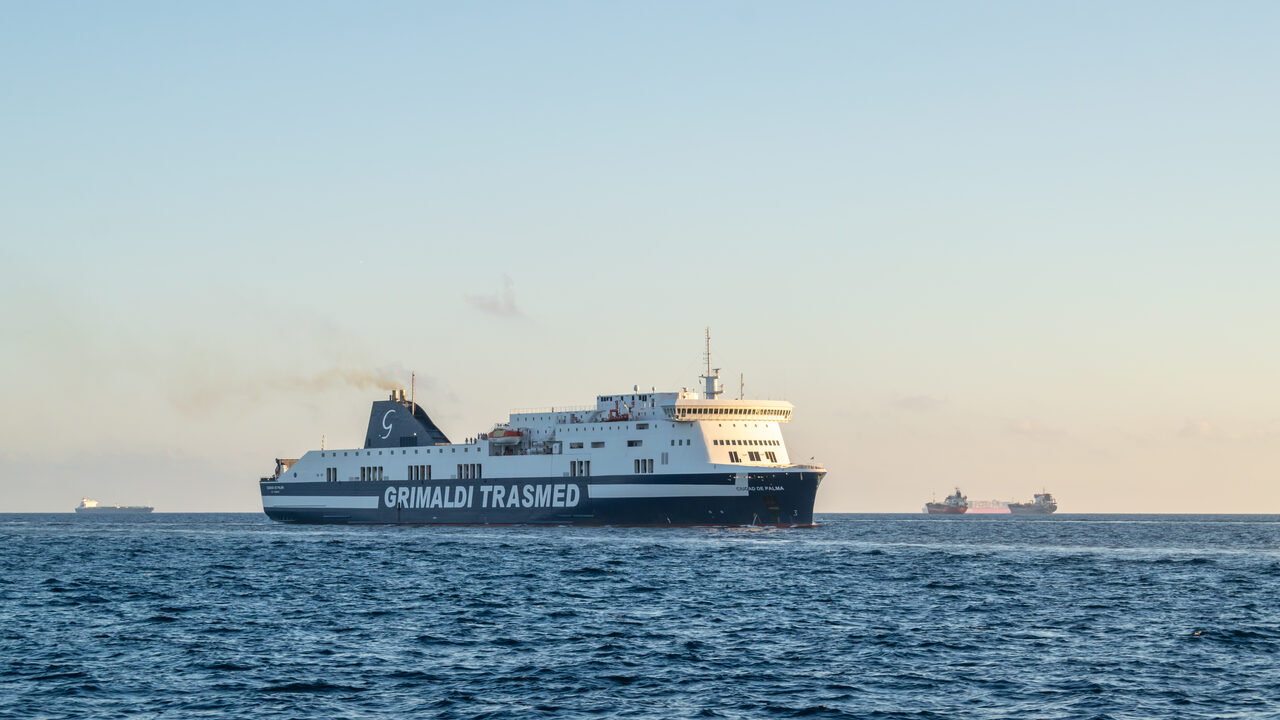
Barcelona is the main mainland port for the Balearic Islands, and its ferry terminals are not the cruise terminals. This guide sits beside our Barcelona ferry hub, which lists the routes we have verified, and covers how to find the right terminal, what the crossings are like and what to ask before you book. If you are in Barcelona on a ship, start with our Barcelona port guide.
1. Which terminal?
The Port of Barcelona's ferry page lists three ferry terminals. F1 is the terminal Baleària uses for the Balearic Islands. F2 is the international terminal, used by Trasmed GLE, Algerie Ferries, GNV and Baleària for the Balearic Islands, Italy and North Africa. F3 is used by Grimaldi Lines for Italy and the Balearic Islands. The page says the terminals have sanitary services, catering and wifi, and are reached by public transport or by car from the ring roads, and it points to the port's boarding information and arrivals and departures pages.
Two cautions. The port's operators page lists Baleària at the Adossat and Lepant wharves and Trasmed GLE at the Barcelona Ferry Terminal (Muelle de San Beltrán), and a port news release of 25 March 2026 says Baleària will have a new terminal on the Adossat wharf, due to open in February 2027, while it currently embarks and disembarks in various port areas. And booking sites use other names: Ferryhopper lists Drassanes, Ferry Barcelona and Grimaldi terminals. Use the terminal named on your ticket, and confirm it with the operator before the day.
2. Getting there from the ship or the airport
From a cruise terminal, the port's transport page lists a cruise bus from the Adossat pier terminals to the city centre at €3.5 one way or €5 return (as listed on the page read on 29 October 2026; check before you travel). TMB describes the T-3 Portbus linking the cruise terminals with several bus lines and the metro, with Drassanes (line L3) the nearest station. Both pages cover the cruise terminals; neither says the buses stop at the ferry terminals, so ask which service reaches yours.
From the airport, Aena lists the Aerobús A1 (terminal T1) and A2 (terminal T2) to Plaça Catalunya. TMB says the L9 Sud metro connects both terminals with the city every 7 minutes, taking 32 minutes to the centre, and that ordinary single tickets are not valid for airport journeys: you need a Hola Barcelona Travel Card or an Airport Ticket. That page does not describe step-free access. We found no direct airport-to-ferry-terminal service, so plan two legs.
3. What the crossings are like
| Destination | Shortest crossing Ferryhopper lists | Operators it lists |
|---|---|---|
| Palma (Mallorca) | 6 h 45 min to 7 h | Trasmed, Baleària, GNV |
| Ibiza | 8 h 30 min; its text says about 8.5 hours | Baleària, GNV, Trasmed |
| Menorca: Mahón | 6 h 59 min to 7 h | GNV, Trasmed |
| Menorca: Ciutadella | 3 h 30 min | Baleària |
These are a booking site's figures, not an operator's timetable, and the page disagrees with itself in places (for example it gives Mallorca as around 3.5 hours in one place), so read the operator's schedule for your date. Ferryhopper lists service on 5 to 7 days a week and mentions evening and overnight crossings to the Balearic Islands without naming specific sailings. Trasmed's Palma page says you can travel by day or at night, with standard seats, an exclusive-use cabin or pet-friendly cabins; its Ibiza page gives an average crossing of 8 to 9 hours. A crossing of around seven hours each way is a trip in itself rather than a side excursion on a port call.
4. Tickets and check-in
Trasmed asks foot passengers to arrive 30 minutes before departure and says boarding closes promptly; with a vehicle the time is 60 minutes, though another passage on its Ibiza page suggests 90, so confirm. It recommends online check-in through its app. If you have asked for reduced-mobility assistance, it recommends arriving 2 hours before departure. Its terms say all its ships have cabins and seats for passengers with reduced mobility, that an adapted cabin is booked through its Customer Service Centre or the terminal ticket office, and that online check-in is not available in those cases, so you check in at the ticket counter.
We could not read Baleària's own check-in pages today (they returned an error), so we state no Baleària rule here; look it up on its site before you go. On weather, Trasmed's terms say departure times may be affected by force majeure or other causes that prevent safe navigation, and that cancellation is only permitted for tickets bought with its Flexibility Plus fare. They do not say whether a storm cancellation by Trasmed is refunded, so ask Customer Service. Our guide When Your Ferry Is Cancelled covers the next steps.
5. Luggage, comfort and access
Trasmed says there is no limit on the weight or number of bags, that foot passengers must carry their own luggage in a single trip, and that most ships have a free trunk service; its Ibiza page adds free secure luggage storage on board. Questions worth asking any operator: how far it is from the terminal door to the boat, whether a lift or ramp is available, and where you can sit or rest. Our comfort checklist and fast or conventional ferry guides help you choose.
6. Planning around the ship
Treat the Balearic ferry as a plan for before or after your cruise, with a night in between if you need one. A separate ferry ticket does not protect you if the ship sails; read why separate tickets need a buffer. For the island end, see our Palma port guide. We have not checked any ship's schedule, and nothing here says a ferry fits a particular port call.
Checked on 29 October 2026: the Port of Barcelona (ferry terminals, operators, transport services, access and transport pages, and the news release on the Baleària concession), TMB (Portbus and airport metro pages), Aena (airport bus page), Trasmed (route pages, terms of sale) and Ferryhopper's Barcelona page. Baleària's help pages and press pages could not be opened. Timetables, prices and rules change, so confirm with the operator before you travel.