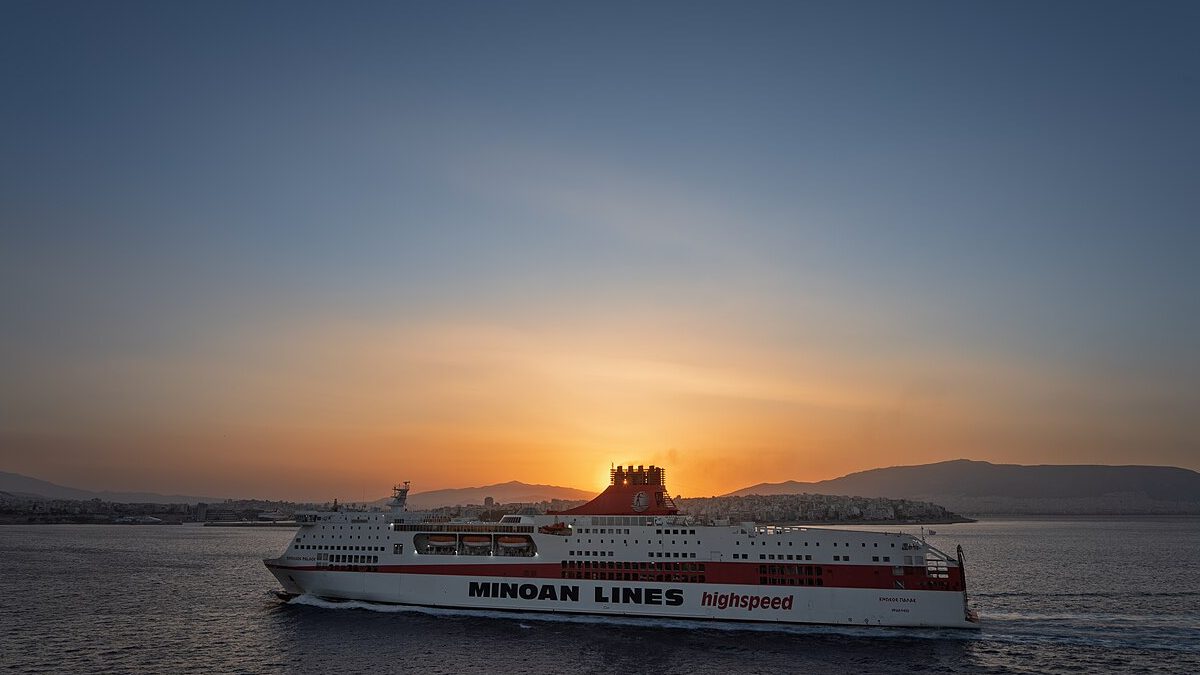
This guide is for anyone who wants to choose a ferry by what they actually need: how far you can walk, whether you can manage steps or a steep ramp, whether you use a wheelchair, scooter or stick, and how long you can stand. It is not about age. Plenty of travellers in their seventies run up the gangway; plenty of forty-year-olds have a bad knee. Start from your needs, then check the ship.
1. Write down your own access needs first
Before you look at a single timetable, list the things that make a crossing easy or hard for you. Operators answer specific questions far better than general ones, and a short list also becomes the text of your assistance request later.
- How far can you walk without a rest, and on what surface?
- Can you manage stairs between decks if the lift is busy or out of order?
- Do you use a wheelchair, scooter or walking aid, and what are its width, length and weight?
- Do you need an accessible toilet, a seat near an exit, or space for an assistance dog?
- Do you bring medical equipment (for example oxygen) that the operator must approve?
2. Gangway access is not the same as access on board
Getting on is only the first step. On a large conventional ferry you may board through the car deck, then need a lift or stairs to reach the passenger lounges; on a smaller high-speed boat you may board straight into the seating area but have narrower aisles and fewer toilets. Ferryhopper, a booking platform for Greek ferries, says many ships have accessible seating but that the number of accessible cabins is limited, so they should be booked early.
Ask about the whole journey: from the quay to the ship, from the boarding deck to your seat or cabin, to the toilet, and back off again at the other end.
3. What the EU rules guarantee
Most ferries leaving a port in the European Union are covered by Regulation (EU) No 1177/2010 on the rights of sea passengers. For travellers with a disability or reduced mobility (the rule explicitly includes reduced mobility caused by age), the key points are:
- Carriers may not refuse a booking or boarding because of disability or reduced mobility as such (Article 7). They may refuse only for safety requirements set by law or the authorities, or where the ship's or port's design makes safe boarding impossible, and they must then try to offer an acceptable alternative (Article 8).
- Assistance in ports, including embarking and disembarking, and on board is free of charge (Article 10).
- To be sure of it, tell the carrier or terminal operator at least 48 hours before you need it, and be at the port or its designated meeting point at the time the carrier sets in writing, which may not be more than 60 minutes before the published embarkation time (Article 11).
- Tell the carrier about specific needs for seating, a cabin or medical equipment when you book, if you already know them (Article 11(2)). Where strictly necessary for safety, the carrier may require a companion, who then travels free on passenger services (Article 8(4)).
- If your wheelchair or other mobility equipment is lost or damaged through the carrier's or terminal operator's fault, compensation covers its replacement value or repair (Article 15).
The rules do not apply to every boat. They exclude ships certified for up to 12 passengers, crossings under 500 metres, and excursion and sightseeing tours other than cruises (Article 2). A small island taxi boat or a day-trip cruise may therefore not be covered.
4. Send the request, and keep the reply
Make the request in writing, through the operator, your travel agent or the booking site you used: the regulation lets you notify any of them, and you should receive a confirmation that your needs were notified (Article 11(3)). Keep that confirmation on your phone and on paper.
A short message works best. Give the date, the departure time, the ports, your booking reference, the ship's name if you know it, and the needs from your list in step 1. Ask three direct questions: how will I get from the quay to the ship, is there a lift to the passenger deck on this ship, and where is the accessible toilet?
5. Plan for a different ship or a broken lift
Greek operators sometimes swap ships on a route, and a different vessel can have different access. On the day, ask at the check-in or ticket desk whether the ship is the one you were told about. If the lift is not working or the ship has changed, say so to the crew before boarding, show your written confirmation, and ask what they can do. If you are denied boarding even though you notified your needs in time, the regulation gives you, and any companion, the choice of a refund or re-routing (Article 8(3)).
6. Your booking-question checklist
| Question | Why it matters |
|---|---|
| Which ship sails this departure? | Access differs between vessels on the same route. |
| How do I board: ramp, gangway, car deck? | Ramps can be steep; car decks can be busy and noisy. |
| Is there a lift to the passenger deck, and is it working? | Stairs are the usual alternative. |
| Where are the accessible seats and toilet? | Some ships have few, and they fill first. |
| Can my wheelchair or scooter travel, and where is it stored? | Size and battery rules vary. |
| Where and when do I meet the assistance staff? | The law caps the meeting time at 60 minutes before embarkation. |
| Can I have the answers in writing? | Your written confirmation is your evidence on the day. |
For the port itself, see our Athens / Piraeus port guide and the ferries from Piraeus.